

No products in the cart.
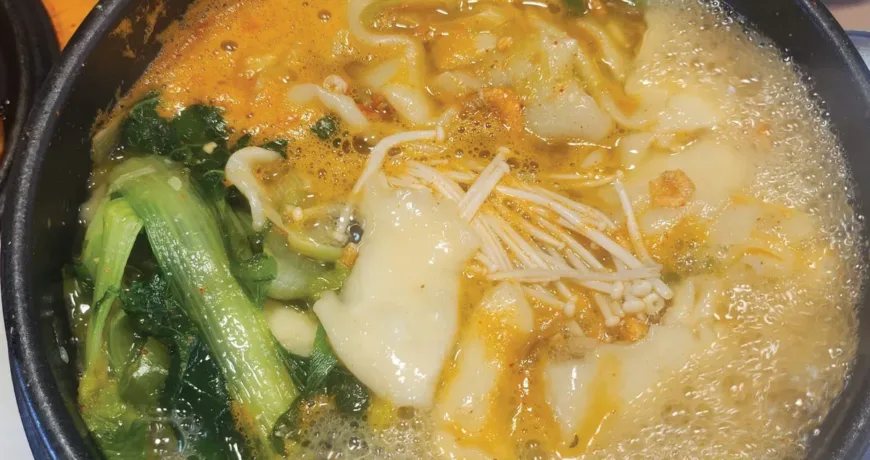
Teollegisujebi || Spicy Fish Stew With Hand-Pulled Dough, 털레기 수제비 1
Teollegisujebi is a hearty and comforting Korean noodle soup that originated in the Gyeonggi Province. It’s characterized by its unique hand-pulled dough, which is torn into irregular pieces and added to a flavorful broth. The soup is often seasoned with spicy gochujang (Korean chili paste) and various vegetables, creating a warm and satisfying meal.
Key Ingredients:
- Dough: Wheat flour, water, salt
- Broth: Anchovy stock, soybean paste, gochujang, garlic, ginger, vegetables (e.g., zucchini, potatoes, onions)
How to Make Teollegisujebi:
- Prepare the Dough: Mix wheat flour, water, and salt to form a dough. Knead the dough until it becomes smooth and elastic.
- Make the Broth: Boil anchovy stock with soybean paste, gochujang, garlic, and ginger. Add vegetables of your choice.
- Add the Dough: Tear pieces of dough from the dough ball and add them to the boiling broth.
- Cook and Serve: Cook the soup until the dough is cooked through and the flavors have blended. Serve hot.
Tips for Making Delicious Teollegisujebi:
- The Dough: The key to a good teollegisujebi is the dough. It should be soft and pliable, but not too sticky.
- The Broth: A flavorful broth is essential. Use a good quality anchovy stock and adjust the amount of gochujang to your desired level of spiciness.
- The Vegetables: Add a variety of vegetables to your soup for a more balanced meal.

This content is licensed under a Creative Commons Attribution-NonCommercial-ShareAlike 4.0 International license. (Except for certain content with specific license terms.) Copyright for videos (such as YouTube) belongs to the respective copyright holders. Please note that some of the content on this blog may be unverified, biased, or contain errors. We encourage you to exercise critical thinking and verify information from multiple sources.
https://english.visitkorea.or.kr/svc/contents/contentsView.do?menuSn=&tagNm=%23Korean_food&tagSn=168&sContsTtl=&sort=regDt&page=14&vcontsId=181800